
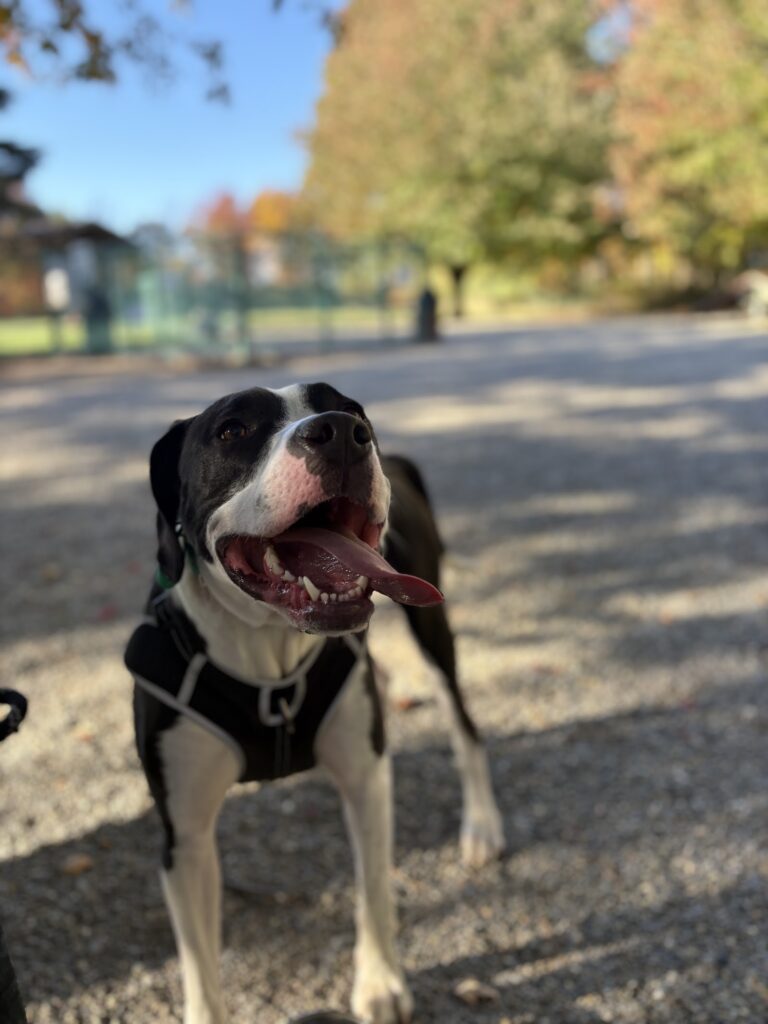

When the barking is the soundtrack of your house
You know the routine. The mail truck turns onto your street and your dog loses it. Someone walks past the front window and the barking starts again. A friend comes over and you spend the first ten minutes of the visit shouting over the noise. Maybe a neighbor has said something, or you have started dreading the doorbell in your own home.
I’m Jason, behaviorist and trainer at Off Leash K9 Training, Jersey Shore. Before I trained dogs I worked in construction, and a lot of my work now is with the dogs other people have given up on: reactive dogs, fearful dogs, dogs who guard things. Barking is often the first sign families notice, and it is one of the most fixable. The trick is to stop treating it as one problem. A dog who barks at the window and a dog who barks when you leave are telling you two very different things.
Why your dog barks: the five common reasons
Barking is communication, and the first job is to work out what your dog is saying. Most of the excessive barking we see falls into one of these groups:
- Alert barking. Something changed outside: a car, a delivery, another dog on the sidewalk. Your dog is announcing it, and every time the “intruder” leaves, your dog believes the barking worked.
- Demand barking. Your dog barks at you for food, a ball, attention or to be let out. If barking has ever gotten them what they wanted, they will keep trying it.
- Boredom and pent-up energy. A young, smart dog with nothing to do will invent a job, and barking at the yard is an easy one.
- Fear and reactivity. Some dogs bark to make the scary thing go away: the dog across the street, the stranger at the door. This is the bark that often comes with lunging, raised hackles or hiding.
- Distress when alone. Barking or howling that starts as soon as you leave, and only then, can be a sign of separation anxiety. That one needs its own plan, which we cover in our post on dog separation anxiety.
Spend a few days just noticing. When does your dog bark, at what, and what happens right after? Write it down if you can. That short list tells you more than any generic tip will.
What makes barking worse without you realizing it
Most of the families I meet are doing reasonable things that happen to keep the barking going. A few of the usual ones:
- Yelling back. To your dog, you just joined in. Loud, excited voices tend to raise the energy in the room, not lower it.
- Giving in to demand barking. Tossing the ball or opening the door to make the noise stop teaches your dog exactly how to get those things next time.
- Leaving the window seat open all day. A dog who spends hours watching the street gets hours of practice at barking at it. Practice makes it stronger.
- Not enough structure. A dog with no rules in the house and no real exercise has a lot of energy and no clear idea of what you want instead.
- Quick-fix gadgets on their own. Plenty of owners try a bark collar before they call us. Finley’s family did. A tool used without teaching the dog what to do instead rarely makes a lasting difference.
A step-by-step plan to bring the barking down
This is the approach I would give any family in Toms River, Brick or Jackson who is tired of the noise. Consistency matters more than any single step, so get everyone in the house on the same plan.
1. Manage the triggers first. Before you train anything, cut down the practice. Close the blinds on the front window, move the couch your dog uses as a lookout, or use a baby gate to keep them out of the front room while you are at work. Every bark you prevent is one less rehearsal.
2. Teach a “place” command. A place is a bed or cot your dog goes to and stays on until you release them. It gives your dog a clear job when the doorbell rings, and a dog lying on a bed is much less likely to be charging the door. Start in a quiet room, reward your dog for staying, and build up the time slowly before you add the doorbell.
3. Acknowledge, then redirect. For alert barking, let your dog have one or two barks, calmly say “thank you” or “enough,” and call them to you or to their place. Reward them for coming away from the window. You are teaching that you have heard the warning and you have it handled.
4. Stop paying for demand barking. When your dog barks at you, go still and look away. The moment they are quiet for a few seconds, then you give them the thing. It often gets louder for a day or two before it gets better. Hold the line.
5. Drain the energy in a useful way. A structured walk where your dog is beside you, a few short training sessions a day, and something to chew in the evening go a long way. A tired, mentally worked dog barks less. Our post on exercising your dog indoors has ideas for the days the weather keeps you in.
6. Practice the doorbell on purpose. Have a family member ring the bell while your dog is on their place, reward the quiet, and repeat it many times when nothing is at stake. You want your dog to have rehearsed the right answer long before a real guest arrives.
Barking on walks is a different job
Barking and pulling on the leash at other dogs, bikes or people is usually a mix of excitement, frustration and, in some dogs, fear. The fix starts with the walk itself: your dog walking at your side, paying attention to you, instead of out front leading the charge. Give yourself more distance from the trigger than you think you need, and reward your dog for looking at you instead of the other dog.
For dogs whose walks have turned into a battle, our one week leash walking board and train is built for exactly this: an on-leash heel to stop the pulling and barking on walks, plus manners like not jumping up on people. You can read more on our leash training page, and our earlier post on handling distractions during walks has a few drills to start with.
Puppies and barking
If your barker is still a puppy, you are in the best possible spot, because habits are much easier to build than to undo. Do not reward demand barking, give your puppy plenty of naps (an overtired puppy is a noisy puppy), and start teaching a calm crate routine early. Our guide to crate training a puppy walks through it step by step, and the older post on solving puppy training problems covers other early habits. Our puppy programs on the puppy training page run from 8 to 20 weeks of age.
When barking is a sign of something bigger
Most barking is a habit that responds to structure. A few patterns are worth a call to a trainer sooner rather than later:
- Barking that comes with lunging, growling or snapping at people or other dogs.
- Barking aimed at one family member, a baby or a visitor who has done nothing to the dog.
- Barking that starts the moment you leave and goes on for a long time.
- A sudden change in a dog who used to be quiet. Check with your vet first, because pain can show up as noise.
Fear-based barking is the kind I spend most of my time on, and the earlier it is addressed the easier it is to turn around. If your dog’s barking comes with aggression toward other dogs or people, start on our aggressive dog training page.
A real Jersey Shore example: Finley
Finley is a four year old aussiedoodle whose family wrote her review on Google themselves. She barked without stopping for the entire time any guest was over. Her family had already tried an in-home trainer, a bark collar and medication. Then a new baby arrived and the barking turned into lunging at the baby. Finley spent two weeks in a board and train with Jennifer, our owner and head trainer. Her family say the constant barking stopped, she learned to go to her place and hold it, and she now stays on her place while they greet people at the door. You can read Finley’s full story.
Her family were also honest that the work continues at home, and that is true of every dog. Training gives you the foundation and the tools. Living it every day is what makes it stick.
Getting help with a barking dog at the Jersey Shore
If you have tried the basics and the barking is still running your house, we can help. For dogs 20 weeks and older, our private lessons start with come, sit, place and down, and our board and train programs give your dog two weeks of daily structure with a trainer who works with only three dogs at a time. You can compare every option on our plans and pricing page.
Not sure which one fits? Call us at (848) 221-5161 for a free consultation. We work with families across Toms River, Brick, Jackson, Howell, Freehold, Middletown and the rest of the Jersey Shore.